Observatory Version of Misc Musings, Ravings, and Random Thoughts

The concept of a 'reset' of reward, aversion and plasticity networks makes sense to me simply in terms of experience with addiction,
Right there with you. To me, the appeal of psychedelics for treatment of PTSD/Anxiety/Depression/Addiction/Etc is that it's potentially a long-term mental "reset" after a single-digit number of doses rather than the conventional approach of spending years (or the rest of your life) of daily (or twice daily) doses of various SSRIs/SNRIs/Benzos/etc - which also tend to have rather unpleasant side effects.

Don't get me wrong, the (largely anecdotal) reports on ibogaine indicate it can be effective in this realm. My concern is that other psychedelics can achieve similar results while also having meaningfully lower risk and a meaningfully less-unpleasant treatment experience.
 
  • Like
Reactions: dzid

dzid

Ars Centurion
3,373
Subscriptor
Right there with you. To me, the appeal of psychedelics for treatment of PTSD/Anxiety/Depression/Addiction/Etc is that it's potentially a long-term mental "reset" after a single-digit number of doses rather than the conventional approach of spending years (or the rest of your life) of daily (or twice daily) doses of various SSRIs/SNRIs/Benzos/etc - which also tend to have rather unpleasant side effects.

Don't get me wrong, the (largely anecdotal) reports on ibogaine indicate it can be effective in this realm. My concern is that other psychedelics can achieve similar results while also having meaningfully lower risk and a meaningfully less-unpleasant treatment experience.
I actually had (FWIW) success with Prozac way back when I started with Intro to Bipolar. I didn't think about it until much later, but Prozac may have allowed me a window to frame my thoughts about living with it with less anxiety about the way my mother handled hers. Who knows? I stopped taking it after two months, though.

I have more concern about the potential for a dropout in motivation and concentration, the kind that someone mentioned months ago where I'm unable to read a paragraph, even if I try six or eight times. Then I'll drop the book for a few days, forget about the issue, and then try again and realize it's not getting better. That's the only thing that reaches the point where I'm unsure about whether I can live with that. It sucks, it really is the worst of all in my experience.

Psychedelics make me a little nervous, to be honest. I've taken them before, but I have an uneasy feeling that I might not handle them well in my current situation. Hard to say why.
 

Auguste_Fivaz

Ars Praefectus
5,837
Subscriptor++
Stuart Penkett obituary in The Guardian
Atmospheric chemist whose laboratory work helped to identify the causes of acid rain and the hole in the ozone layer

Penkett, who has died aged 87, and his colleagues at the Atomic Energy Research Establishment (AERE) in Harwell, Berkshire, published a landmark paper in 1979 in the journal Atmospheric Environment, identifying how sulphur dioxide, primarily emitted from industrial sources, is converted into sulphuric acid in clouds that subsequently falls as rain.

Later, while based at the University of East Anglia (UEA) in Norwich in the 1980s, Penkett worked on understanding the processes that produce and destroy ozone in the Earth’s atmosphere.
RIP and thank you Dr. Penkett
 

iPilot05

Ars Praefectus
3,832
Subscriptor++
Can they send back better imagery on this fly-by mission than they did in the late '60s and '70s?

I know it can't be real time but does the current transmission technology allow high resolution video and photos?
It would be pretty shocking if they didn't plan on that. No technical reason they can't stream several 4K HDR streams live.
 

wco81

Ars Legatus Legionis
32,474
For some reason, I thought that radio signals took minutes to reach earth at the speed of light.

But Google AI Overview says it's about 1.3 to 1.5 seconds. I didn't double-check the math and AI did have problems with math problems posed as words but I assume that's correct.

Well we did have black and white TV transmissions from the surface of the moon -- or the alleged surface of the moon, not a TV studio in Hollywood.:sneaky:
 
For some reason, I thought that radio signals took minutes to reach earth at the speed of light.

But Google AI Overview says it's about 1.3 to 1.5 seconds. I didn't double-check the math and AI did have problems with math problems posed as words but I assume that's correct.

Well we did have black and white TV transmissions from the surface of the moon -- or the alleged surface of the moon, not a TV studio in Hollywood.:sneaky:

Yup, they were definitely faked, it's just Kubrick was such a perfectionist he insisted they shoot on location.

/s
 

Dmytry

Ars Legatus Legionis
11,443
The other thing is that for higher bandwidth you need higher signal-to-noise ratio, and you need all the right high bandwidth electronics for processing the signal on the receiving end. So let's say you have a radio telescope pointed there, and you have your signal, but you have to have it converted to a digital form and, instead of being simply stored to be analyzed later, do all the DSP on it to get the binary stream from what ever ADC you're using, that you can then process as usual.

Or you need to somehow cobble together the electronics to feed the analog signal from the radio telescope to some commercial off the shelf receiver, which is also not so straightforward.

Either way it'll require a bunch of work just to enable that 4k live stream. Because none of the equipment you actually have is built for that use case, and because high quality video is close enough to the edge of what's doable with specialized electronics, that it is hard (albeit not impossible) to deal with using any general purpose electronics and computing.

edit: to put some numbers on this, with an IPhone at 4k 60fps thanks to wonders of modern video compression, you get something like half a gigabyte per minute, or around 67 megabit per second, so that should be somewhere within range of what's doable by a modern digital receiver on a radio telescope, but still high enough to where it isn't super easy to do all the DSP stuff on it. Additionally, well compressed video is pretty fragile and ends up either with nasty looking block artifacts or needs a fair bit of error correcting data.

All in all I wouldn't necessarily expect a perfect 4K 60fps live stream from there. It's possible, and it is doable, but it isn't straightforward. I worked on projects where live aspect of them was deemed non essential and then horribly mismanaged and the resulting system just couldn't work live, even though it was technically very doable and accomplished by other smaller teams. And NASA doesn't have an unlimited budget.

I think a slightly glitchy 1080p is fine.
 
Last edited:

Anacher

Ars Praefectus
5,647
Subscriptor++
The other thing is that for higher bandwidth you need higher signal-to-noise ratio, and you need all the right high bandwidth electronics for processing the signal on the receiving end. So let's say you have a radio telescope pointed there, and you have your signal, but you have to have it converted to a digital form and, instead of being simply stored to be analyzed later, do all the DSP on it to get the binary stream from what ever ADC you're using, that you can then process as usual.

Or you need to somehow cobble together the electronics to feed the analog signal from the radio telescope to some commercial off the shelf receiver, which is also not so straightforward.

Either way it'll require a bunch of work just to enable that 4k live stream. Because none of the equipment you actually have is built for that use case, and because high quality video is close enough to the edge of what's doable with specialized electronics, that it is hard (albeit not impossible) to deal with using any general purpose electronics and computing.

edit: to put some numbers on this, with an IPhone at 4k 60fps thanks to wonders of modern video compression, you get something like half a gigabyte per minute, or around 67 megabit per second, so that should be somewhere within range of what's doable by a modern digital receiver on a radio telescope, but still high enough to where it isn't super easy to do all the DSP stuff on it. Additionally, well compressed video is pretty fragile and ends up either with nasty looking block artifacts or needs a fair bit of error correcting data.

All in all I wouldn't necessarily expect a perfect 4K 60fps live stream from there. It's possible, and it is doable, but it isn't straightforward. I worked on projects where live aspect of them was deemed non essential and then horribly mismanaged and the resulting system just couldn't work live, even though it was technically very doable and accomplished by other smaller teams. And NASA doesn't have an unlimited budget.

I think a slightly glitchy 1080p is fine.

I would like to introduce you to O2O. Optical to Orion. We can do 4k live streaming.

https://www.nasa.gov/goddard/esc/o2o/

https://www.ll.mit.edu/news/lincoln...nal-launches-historic-artemis-ii-moon-mission

260 megabits/sec downlink.
 

Dmytry

Ars Legatus Legionis
11,443
I would like to introduce you to O2O. Optical to Orion. We can do 4k live streaming.

https://www.nasa.gov/goddard/esc/o2o/

https://www.ll.mit.edu/news/lincoln...nal-launches-historic-artemis-ii-moon-mission

260 megabits/sec downlink.
Ok that’s actually pretty cool. I didn’t expect they would go for optical because it requires very exact alignment, and you have diminishing returns on usefulness of things like live 4k 60fps video (as opposes to eg saving weight or improving robustness or the like).

After all, the original Apollo did not send a live stream at a comparable or higher quality than what then-typical TV would display.
 

Anacher

Ars Praefectus
5,647
Subscriptor++
Ok that’s actually pretty cool. I didn’t expect they would go for optical because it requires very exact alignment, and you have diminishing returns on usefulness of things like live 4k 60fps video (as opposes to eg saving weight or improving robustness or the like).

After all, the original Apollo did not send a live stream at a comparable or higher quality than what then-typical TV would display.
Like you had said though, it's all about SNR. Narrow focused beams (RF or optical) to get the highest signal to target.

It's all about tradeoffs. Pointing doesn't have to be as accurate if you have a wider beam (allows you to overcome larger pointing uncertainties), but the tradeoff is weaker signal. And as you get farther from earth, you get the same benefits and drawbacks.

We've managed Lunar Laser before (Lunar Laser Communication Demo, on the LADEE mission) and deep space (Deep Space Optical Communications on the Psyche mission).
 
  • Like
Reactions: davidtheweb

Anacher

Ars Praefectus
5,647
Subscriptor++
I'm going to need to post this over in the lounge later, but this was from earlier.

1775139618664.png


Live Streaming from Orion. Please note there may be outages from time to time.


View: https://www.youtube.com/live/6RwfNBtepa4
 
Last edited:
  • Like
Reactions: davidtheweb

Anacher

Ars Praefectus
5,647
Subscriptor++
The live stream isn't exactly 4k 60fps ... this is a radio link, presumably? Does it need to be landed on the moon to be able to stream 4k?
Live stream is whichever link they are doing at the time. O2O module is on the back of the vehicle, and there are only 3 optical ground stations supporting it. They don't have 24 hr ground terminal visibility to the vehicle. (Never mind vehicle attitude and weather).

I'm not sure if RF can support the live video, and I also don't know what steps are processing the stream between ground receipt and stream to youtube.
 

wco81

Ars Legatus Legionis
32,474
Saw on TV the claim that regular use of GPS causes the hippocampus to shrink. I couldn’t find anything that establishes a causal link.

Instead there are various articles about hippocampus volume being greater for people who habitually exercise spatial memory by NOT using GPS.

But how would researchers validate this possible connection? Do brain scans of people before and after they use GPS regularly? Can scans accurately measure hippocampus volume or could it only be done by post mortem measurements?

Yet spatial memory, the mental map of places you regularly go to, is suppose to be crucial. This piece suggest instead of turn by turn directions, navigation apps would use sonic beacons to direct you towards your destination.

https://www.scientificamerican.com/article/how-gps-weakens-memory-mdash-and-what-we-can-do-about-it/

Or will people just eschew navigation apps for paper maps, the way some people have given up smart phones for flip phones?

I would think that most people below a certain age never used paper maps, yet they presumably remember how to arrive at their schools, work, stores, etc. without using GPS. Or they can remember the route they took when they visited an unfamiliar place to get back to their car or the bus stop without pinning these places in their navigation app.
 
  • Like
Reactions: Bardon

Auguste_Fivaz

Ars Praefectus
5,837
Subscriptor++
I've been a good navigator all my life, can't recall a time where I was lost, even in cities like Tokyo or Rome. But, put me in L.A. and I'm screwed, no idea where the "Valley" is or how to get back to my hotel. My wife on the other hand, being raised in L. A. always knows where we are but in Tokyo, she was lost at all times. Go figure.
 

Scandinavian Film

Ars Tribunus Militum
1,525
Subscriptor++
Saw on TV the claim that regular use of GPS causes the hippocampus to shrink. I couldn’t find anything that establishes a causal link.

Instead there are various articles about hippocampus volume being greater for people who habitually exercise spatial memory by NOT using GPS.

But how would researchers validate this possible connection? Do brain scans of people before and after they use GPS regularly? Can scans accurately measure hippocampus volume or could it only be done by post mortem measurements?

Yet spatial memory, the mental map of places you regularly go to, is suppose to be crucial. This piece suggest instead of turn by turn directions, navigation apps would use sonic beacons to direct you towards your destination.

https://www.scientificamerican.com/article/how-gps-weakens-memory-mdash-and-what-we-can-do-about-it/

Or will people just eschew navigation apps for paper maps, the way some people have given up smart phones for flip phones?

I would think that most people below a certain age never used paper maps, yet they presumably remember how to arrive at their schools, work, stores, etc. without using GPS. Or they can remember the route they took when they visited an unfamiliar place to get back to their car or the bus stop without pinning these places in their navigation app.
IIRC there were studies on London cabbies that showed larger than average hippocampi while they were active, and shrinking after retirement. I don’t have the studies handy, so don’t take my word for it, but they should be out there if you’re curious.

That said, while I am sure that hippocampi sizes are scientifically interesting, I’m gonna read between the lines here and infer that the question under investigation here is “has the use of GPS navigation made us worse at navigating without it?” I would guess that most people only use GPS to get to new places the first few times and then transition away from it as they learn the routes, but maybe a big chunk of the population uses it for literally every trip? Might be interesting to study if the latter group is worse at navigation than the former, or if GPS use increases the time it takes to learn a route vs paper maps/directions.
 
While this is anecdotal, I have two friends who would have a hard time finding anything more than half a mile from their house without guidance in places they’ve lived for a decade. One of them also can’t articulate their route to their job that hasn’t changed in 4 years.

So, yes, ‘hopelessly navigationally challenged’ is definitely a category of people.
 
  • Like
Reactions: Bardon

wco81

Ars Legatus Legionis
32,474
I use GPS every time I travel.

I used to use paper maps. But I would have to look at the map every few turns and I'd have to pull over, look in the map and locate my current position and look for the next turns.

It's just a big time saver and when planning trips, you can save locations where you're going to drive to and just open it on Google Maps on the phone.

When you watch a show like The Amazing Race, you can see younger contestants who've never used paper maps. They just borrow phones from onlookers instead.

It's possible to navigate an unfamiliar place with paper maps but it will take much more time, more prone to errors.
 

Dmytry

Ars Legatus Legionis
11,443
I generally try to memorize the map before I go anywhere, along with whatever could be useful for navigation.

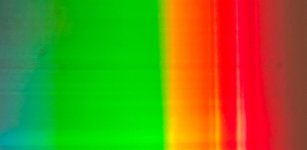
In completely unrelated to the above: I built a prism spectroscope, and was looking at my LED bulbs and most of them have what you expect, a broad blue and a broad green to red.

Some bulbs, however, have 5 well defined emission lines on the red side of the spectrum:

new_led_bulb_spectrum.jpg

A pair in orange, a pair in red, and another one deeper red. edit: also funnily enough my computer screen's backlight has the same spectrum, so I can look at this spectrum with the spectroscope and see this spectrum.

(Taken a picture with an IPhone held to the eyepiece, hence the atrocious quality. Looks much better with my eye. I need to 3D print a camera adapter so I can take a decent picture).

I wonder what that is. Europium or other rare earth doping in phosphor, is my guess.
 
I would guess that most people only use GPS to get to new places the first few times and then transition away from it as they learn the routes, but maybe a big chunk of the population uses it for literally every trip? Might be interesting to study if the latter group is worse at navigation than the former, or if GPS use increases the time it takes to learn a route vs paper maps/directions.
If I'm going to the other side of Austin, I'll use GPS(Waze) for nearly every trip.

Not because I can't freeball the navigation - because the "optimal route" depends on where the traffic and/or construction is most fucked up at that moment in time.

There are 3 major routes (183, I35, Mopac) two of which have toll overlays. Plus a fairly major secondary route and a toll-only route. Which one is going to be fastest? Is the toll going to be worthwhile? I need something that digests current traffic data to inform me.
 
  • Like
Reactions: Bardon

Dmytry

Ars Legatus Legionis
11,443
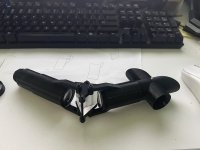
Picture of said spectroscope:

prism_spectroscope.jpg

I bought a 32mm Eisco labs dense flint prism on Ebay, and took apart some very crappy 12x20 binoculars for all the lenses.

I used reflection from a sewing needle instead of a slit (which is a known trick in astronomy circles, apparently). On the right, the 90 deg coupling looking thing is the housing for the needle. With a extra mirror, I can make it into a direct viewing spectroscope.

I'm thinking of designing a whole optics learning kit, inspired by "Konstruktor-Optik" kit I had (which I used in a spectroscope build many many years ago, using an aquarium-like prism I glued from glass and filled with water).

With 3D printing I would be able to adapterize random lenses, old webcams, etc etc.

Interestingly, a lot of spectroscopes have optics pivoting around the middle of the prism, which is both mechanically and optically awkward. The collimating lens and the scope should revolve around the centers of respective prism faces.
 

ChaoticUnreal

Ars Tribunus Angusticlavius
7,873
Subscriptor++
Heard on a podcast that there are plans to build a network of satellites to relay signals between the moon and the earth, in the future when regular missions are anticipated, justifying building out greater bandwidth to and from the moon.
Do we need a "network" not being fully immersed in the tech I'd think maybe 2-3 satellites around earth to ensure one could transmit to the moon no matter where it is and then yes a network around the moon depending on where you want to "hit" on the surface of the moon.

I'm assuming some form of laser beam to send signals between the satellites and not radio. If we are using radio then yeah I could see needed a network but I'd think we could fire a laser from earth orbit to lunar orbit with decent enough accuracy to get the data we need there and back without issue.
 

Dr Nno

Ars Praefectus
5,278
Subscriptor++
You need a kind of network with several relays around the Moon, to cover the time when the ships are on the Far Side, on the ground or in orbit. The Chinese did a rudimentary version of it when then landed their Chang'e 4 lunar rover. This is independant from the medium, lasers or radio waves can't go through the Moon.
 

Anacher

Ars Praefectus
5,647
Subscriptor++

rain shadow

Ars Tribunus Angusticlavius
6,442
Subscriptor++
You need a kind of network with several relays around the Moon, to cover the time when the ships are on the Far Side, on the ground or in orbit. The Chinese did a rudimentary version of it when then landed their Chang'e 4 lunar rover. This is independant from the medium, lasers or radio waves can't go through the Moon.
My neutrino laser IP link is almost finished!!!

[edit: I was just kidding, but apparently this is not a new idea: https://news.mit.edu/2025/physicists-devise-idea-lasers-shoot-beams-neutrinos-0908 ]
 
Last edited:

Dmytry

Ars Legatus Legionis
11,443