Observatory Version of Misc Musings, Ravings, and Random Thoughts

Status
You're currently viewing only wco81's posts. Click here to go back to viewing the entire thread.

wco81

Ars Legatus Legionis
32,474
Watched a movie on a flight called The Hummingbird Project. It’s called that because one flap of a hummingbird’s wings takes 16ms.

That is the time these quants at a HFT firm targets for a private fiber optic network from KS to NY, which would be the shortest line possible. Well it includes code execution time to run this front running software to process thousands of HFT transactions per second.

So these guys quit the firm, find backers and they deploy dozens of crews to trench a direct line. That means paying off dozens of property owners to trench a 12-inch wide conduit. Where they get into difficulty is in Appalachia, where they have trouble drilling through solid granite. Oh there’s a national park there but somehow, their investors are connected enough to allow all those crews with big equipment to drill in the park.

Anyways, their former employer hires some kid out of NYU to solve an obstacle for direct microwave link over the same terrain and they do it in 11 ms.

Are a series of microwave towers faster than fiber optic? Wouldn’t rain and other weather degrade performance?

Of course this is Hollywood so accuracy wouldn’t be expected.

Other part is this software, where the genius who came up with this scheme has to shave 1.39 ms in code execution, so the movie shows him poring over code. Maybe throw faster hardware at it? Or parallelize the code and throw clusters of compute power?

In the end they’re defeated by this microwave network but they hit their target.

So the genius guy comes up with another idea. A “neutrino messaging system” where they’d make an accelerator which goes in a straight line under the earth crust, avoid added distance from curvature of earth, and they’d shoot neutrinos.
 

wco81

Ars Legatus Legionis
32,474
Blog post in Scientific American by head of Public Health at Berkley urges delay in rollout of 5G until health effects are better understood:

Since 5G is a new technology, there is no research on health effects, so we are “flying blind” to quote a U.S. senator. However, we have considerable evidence about the harmful effects of 2G and 3G. Little is known the effects of exposure to 4G, a 10-year-old technology, because governments have been remiss in funding this research. Meanwhile, we are seeing increases in certain types of head and neck tumors in tumor registries, which may be at least partially attributable to the proliferation of cell phone radiation. These increases are consistent with results from case-control studies of tumor risk in heavy cell phone users.


Here is the call for the moratorium on 5G rollout:

As a society, should we invest hundreds of billions of dollars deploying 5G, a cellular technology that requires the installation of 800,000 or more new cell antenna sites in the U.S. close to where we live, work and play?
Instead, we should support the recommendations of the 250 scientists and medical doctors who signed the 5G Appeal that calls for an immediate moratorium on the deployment of 5G and demand that our government fund the research needed to adopt biologically based exposure limits that protect our health and safety.


https://blogs.scientificamerican.com/ob ... g-is-safe/
 

wco81

Ars Legatus Legionis
32,474
In September, a research group of nutritionists and health experts published a guideline which said there was no need to reduce consumption of red meat and processed meats. At the time, leading academics in the field panned the guidelines:


Leading nutritional experts in the United States and the UK are fired up about new dietary recommendations claiming there's no need to reduce your red and processed meat intake for good health.

"This is a very irresponsible public health recommendation," said Dr. Frank Hu, who chairs the nutrition department at the Harvard T.H. Chan School of Public Health.

The new guidelines and five corresponding studies are part of a systematic analysis of existing research done by NutriRECS, a recently formed international group of nutritionists and health researchers. NutriRECS says its mission is to "produce trustworthy nutritional guideline recommendations based on the values, attitudes and preferences of patients and community members."

Bradley Johnston, the lead author of the guidelines and co-founder of NutriRECS, said the analysis failed to find "any certainty that eating red meat or processed meat causes cancer, diabetes or heart disease."

Therefore, the group's new guidelines make a "weak recommendation" based on "low-quality evidence" that most people don't need to reduce their red and processed meat consumption, Johnston said.

"Why would you make a 'weak' recommendation about eating red and processed meat?" asked Stanford School of Medicine nutrition scientist Christopher Gardner. "I'm completely flabbergasted. I'm also really worried about how dangerous this is."

https://www.cnn.com/2019/09/30/health/r ... index.html


Now a large study rebuts these guidelines and even casts suspicion on poultry:

New analysis of long term data on nearly 30,000 people found a small but significant risk of death from any cause tied to eating two servings of processed meat or unprocessed red meat each week.

Similar risks for cardiovascular disease were found for those eating two servings a week of processed meat, unprocessed red meat or poultry -- although that last category might be due to frying or the consumption of skin, researchers said.

There was no association for eating fish, the study found.

One serving of processed meat equaled two slices of bacon, two small sausages or one hot dog. One serving of unprocessed red meat was equivalent to 4 ounces of red meat or poultry, or 3 ounces of fish.

The study also found a 4% higher risk of cardiovascular disease for people who ate two servings per week of poultry. But since the study didn't ask if the chicken was skinless, fried or breaded, the researchers say the findings are not clear enough for any recommendation about levels of poultry intake.

However, the researchers stressed that fried foods, including chicken and fish, should be avoided because deep fat-frying can contribute trans-fatty acids, and fried fish intake have been positively linked to chronic diseases.

Sign up here to get The Results Are In with Dr. Sanjay Gupta every Tuesday from the CNN Health team.

The takeaway from the study? Anyone concerned about their heart health or risk for cancer or other diseases, should limit their intake of red and processed meats, said lead study author Victor Zhong, assistant professor of nutritional sciences at Cornell University, in a statement.

https://www.cnn.com/2020/02/03/health/r ... index.html


Yet another study implicates any most types of proteins:

New research shows limiting protein-rich foods that naturally contain high levels of sulfur amino acids, such as meats, dairy, nuts and soy, may reduce the risk for cardiovascular disease. If future research bears that out, it may be another stepping stone to better health and longer life.

"For decades it has been understood that diets restricting sulfur amino acids were beneficial for longevity in animals," said John Richie, a professor of public health sciences at Penn State College of Medicine in a statement.

"This study provides the first epidemiologic evidence that excessive dietary intake of sulfur amino acids may be related to chronic disease outcomes in humans," Richie added.

In lab studies, rats with sulfur amino acids restricted by 80% saw lifespans increase by an average of 43%. However:

But translating that amazing result to humans would be tricky. Sulfur amino acids play key roles in growth, so restricting those foods in rats created stunted, smaller creatures that happened to live longer with fewer diseases.

Obviously not a good scenario for people, even if the longevity results crossed species. Often what works with lab animals doesn't work in humans.

However, in a 2018 analysis of research, Richie and his team found when diets of fully-grown animals were restricted, adults got the same health benefits without having to worry about retarding growth.

That lead to the current study, published Monday in the journal Lancet EClinical Medicine, which examined the diets and blood biomarkers of more than 11,000 participants collected by a nutritional health survey of Americans done by the Centers for Disease Control and Prevention.

https://www.cnn.com/2020/02/03/health/l ... index.html

So vegan or vegetarian diets may have health benefits but not so much for the palate.
 

wco81

Ars Legatus Legionis
32,474
I think they went for surplus when they could, did they not?

Because there was a risk that future yields wouldn't be as good. They stored things like grains?


Also excess could be traded. You see these medieval towers along rivers and the purpose was to put up a chain and block boats from passing unless they paid taxes.

Without surpluses and profits from trade, people never would have advanced towards civilization. Among the first things they built were towers and walls for defense. Then churches and cathedrals, which were a kind of social banking of wealth.
 

wco81

Ars Legatus Legionis
32,474
Just listened to a podcast discussion of this paywalled article:

Snake venom kills around 140,000 people a year and debilitates roughly 400,000 others. One reason for these large numbers is that every venom needs a specific antivenin to treat it. In places with rich ophidian faunas, dozens of antivenins may therefore need to be kept to hand.

https://www.economist.com/science-and-t ... nake-bites

Anti-venom comes from the plasma or large animals, typically horses, which are inoculated with low doses of venom to allow them to develop antibodies. The anti venom is specific to different snakes. Wrong anti-venom can cause other difficulties even if the victim survives.

They also have to be kept, in large variety, in refrigerated conditions, which could be a problem in poor locales in the tropics (SE Asia, Central and South America) or Sub-Shaharan Africa.

Here is the overview of anti-venom approaches.

https://www.ncbi.nlm.nih.gov/pmc/articles/PMC6767026/


Here is an article which seems to cover the same information about the development of broad-spectrum therapeutics to treat snake venom:

To address the issue of differences in snake venom composition, researcher Nicholas Casewell and colleagues explored the potential of using combinations of small molecule toxin inhibitors as broad-spectrum therapeutics against snake venom.

Through laboratory experiments, the authors of the study found that a number of molecules that had already undergone phase-2 clinical trials were capable of neutralising viper venoms by inhibiting different families of toxins. Using mice for their experiments, the researchers intoxicated the rodents with viper venom, and then administered a single dose of a combination of two inhibitors—marimastat and varespladib—about 15 minutes later. Thereafter, the mice were monitored for 24 hours.

Subsequently, the researchers found that these molecules had succeeded in keeping the mice alive, and were therefore capable of preventing deaths even after the envenoming. Furthermore, this combination was found to be effective against the venoms from a range of vipers from Africa, South Asia and Central America.

These results led the researchers to conclude that the combinations of small molecule toxin inhibitors can indeed neutralise medically important snake venoms. They added that while further preclinical studies are required prior to widespread administration, these therapies could, in the future, provide prehospital treatments for snakebites.

If developed, this form of treatment could also eliminate the limitations that come with the current form of antivenom treatment, including poor dose efficacy, high incidences of adverse reactions due to large doses of foreign immunoglobulins, the requirement for intravenous delivery in a healthcare facility, and reliance on cold chain transport and storage.


https://weather.com/en-IN/india/environ ... ake-venoms
 

wco81

Ars Legatus Legionis
32,474
So that bridge that collapsed, once the ship hit that pylon it caused the collapse not just of the section between the pylon that got hit and the next pylon but the steel structures in the next segments on both sides of the segment over where the collision took place.

Is this expected or the structural failure caused more damaged than it should have? The steel segments was supported not just by the pylons but the other steel segments. It wasn't like a suspension bridge where the cables are going across the length of the bridge -- though if the one of the suspension cables on the Golden Gate Bridge were cut, would the whole thing come down>?
 

wco81

Ars Legatus Legionis
32,474
There aren't really separate "segments" in a steel truss like this - the steel truss is a single structure which is bolted/welded/riveted together and sits on the substructure. In this case, from Streetview it appears that the individual elements (beams/girders/etc) are bolted together with splice plates. If you look at the bridge deck (road surface) in Streetview, you can see that the only real expansion joints are the finger joints at each end of the truss. These handle the temperature-related expansion/contraction of the bridge.

The approaches on a bridge like this often have separate segments for each span.

I am not surprised that once part of the truss came down, the entire truss came down. Have you watched the video?

That makes sense that the steel superstructure was linked together throughout.

Yes I saw the outer segments collapse after the center one.

Let's see if they use a different design for the replacement. The Wiki shows the supports being thinner than they looked in the video. Also seemed like the ends of the bridge or the approaches to the bridge sat on the banks which were higher than the waterline so they didn't require supports there.

It was 52-years old, though completed in 5 years so more like 47 years old.

Maybe the thin supports were chosen for providing the widest paths between the supports and esthetics.
 

wco81

Ars Legatus Legionis
32,474
Saw the last part of an interview with someone, didn't catch his name, who said that a lot of traffic which would have gone to the port of Baltimore will get rerouted to other East Coast ports, so there shouldn't be a long supply-chain disruption.

He referred to the trend that cargo ships had become larger and larger in the 50 years since the FSK bridge was built. He said the Panama Canal was widened to accommodate these ships but it was like a pig passing through a python.

He claimed the accident was entirely preventable. They could have used 1 or 2 tugs and even 1 tug would have kept it under control.
 

wco81

Ars Legatus Legionis
32,474
Apparently cargo ships pay for tug boats, probably by distance towed or maybe time?

There are reports that the ship called for the tug boats minutes before it crashed, probably in a panic.

But that bridge had no protections for the pylons and it survived decades without this kind of catastrophe, maybe more out of luck.

And if the claim that cargo ships have just gotten bigger over recent years is true, then this kind of accident was inevitable without them requiring tug boats all the way in and out of the harbor.
 

wco81

Ars Legatus Legionis
32,474
Boeing did some damage control in response to the whistleblower talking about problems with the 787 assembly process.

On Monday, Boeing engineers outlined the production process in specifics, including the stress testing that it says proves everything on the 787 is within its specified parameters.

"Extensive design analysis and testing that validates all of the decisions we've made," said Steve Chisholm, a vice president and functional chief engineer of mechanical and structural engineering at Boeing.

Chisholm also said that Boeing encourages employees to speak up about problems or concerns they observe, and said that such reporting is key to the company's safety processes.

"Having the voices of our employees heard is of utmost importance," he said. "We do believe this makes us stronger. And it's something we've really been leveraging and emphasizing."


Part of the assembly line at Boeing's Charleston 787 assembly plant in December, 2022. DAVID SLOTNICK/THE POINTS GUY
In addition to an ethics hotline, Boeing employees can use a system called "Speak Up" to report issues anonymously, Lisa Fahl, a Boeing vice president of airplane programs engineering, said Monday.

"You have full visibility to the FAA, and that's a system where we go through and we do an investigation and an evaluation must be performed and documented to support anything that's brought forward," she said.

https://thepointsguy.com/news/boeing-787-777-whistle-blower-defend/

Of course they had to try to refute the whistleblower claims, which are being investigated by the FAA.
 

wco81

Ars Legatus Legionis
32,474
Been thinking about those stranded astronauts, they say they may not be able to leave the space station until August.

So a couple of months up there, weeks longer than planned. At least they're close to the earth so once the spacecraft situation is sorted, they will be back in hours.


That leads to the question, what sort of person would be willing to go to Mars? Even if everything goes as planned the voyage itself would take years round trip.

The lowest energy transfer to Mars is a Hohmann transfer orbit, which would involve a roughly 9-month travel time from Earth to Mars, about 500 days (16 mo)[citation needed] at Mars to wait for the transfer window to Earth, and a travel time of about 9 months to return to Earth.[9][10] This would be a 34-month trip.

Even if one is young, doesn't have as many familial ties, it's a huge commitment. Typically the astronauts are over 30, already have started families.

Would they send unmanned probes simulating this voyage to prove that it works, that it would be reliable?

Or send people and rely on probabilities?

In any event, 3 years is a long time, even to someone say in their early to mid 20s. Even if there isn't the risk of equipment failures, what does 3 years away from earth do to the health of the astronauts?

So what would motivate people to undertake this voyage? Intellectual curiosity? Adventure? Absolute belief in the mission? Fame? Fortune?

I think the explorers back in the 15th and 16th centuries who embarked on these expeditions of unknown length were motivated by the prospect of fortune. People signed up for these missions, even after seeing many who didn't return. Of course there were successful missions.

I was reading about a shipwreck off the coast of Columbia in 1708 of a Spanish ship, which was carrying back tonnes of gold coin from Bolivia. All 3 nations have laid claim to the shipwreck contents and one American salvage company, which claimed to have discovered it. They're making a $10 billion claim to the UN Court of Arbitration.

No doubt an expedition to Mars will bring back minerals of some kind but probably not precious metals. Of course unmanned probes have already detected and sampled minerals from the surface of Mars.
 

wco81

Ars Legatus Legionis
32,474
Also, anybody planning to go on a manned mission to mars is going to expect to die at any point during the trip. Returning alive is entirely optional, especially in the first hundred or so missions.
😲

They have to send robots with maybe some animals to demonstrate that the vehicle technology is reliable first.

Otherwise, who's going to sign up if there is any significant probability of not surviving?
 

wco81

Ars Legatus Legionis
32,474
The biggest iceberg in the world, about twice the size of Rhode Island, is stuck on a sea mountain and spinning slowly in place. Iceberg originally broke off from Antarctica in 1986!

When the floating mass initially broke off from the ice shelf in the ’80s, it didn’t get far before grounding on the bottom of the Weddell Sea. Melting in place for over three decades, it eventually loosened enough in 2020 to start a gradual drift toward the world’s greatest ocean current system, the Antarctic Circumpolar Current. But when the iceberg reached the current in the spring, instead of being sent into the slightly warmer waters of the South Atlantic Ocean, its journey was halted once more.

The frozen block is slowly rotating above an underwater mountain named Pirie Bank Seamount, which is about 1,000 meters (3,280 feet) tall. The iceberg, which measures about 61 by 59 kilometers (about 37.9 by 36.7 miles), is slightly smaller than the mountain and is “at that sweet spot in size, where it’s retained by the column, but it doesn’t stick out of the column too much. So, it doesn’t get pushed away very easily,” said Dr. Alexander Brearley, a physical oceanographer with British Antarctic Survey.

https://www.cnn.com/2024/08/15/science/spinning-iceberg-a23a-taylor-column-seamount/index.html
 

wco81

Ars Legatus Legionis
32,474
Researchers in Chicago have proposed a new way to warm up Mars by releasing manufactured nano particles.

https://www.msn.com/en-us/news/tech...rapping-glitter/ar-AA1owolY?ocid=BingNewsVerp
There are numerous challenges to human settlements on Mars: lack of breathable oxygen, harmful ultraviolet radiation due to its thin atmosphere, salty soil hostile to growing crops, dust storms that sometimes cover much of the planet and more. But its frigid temperatures are a serious impediment.

"We propose to show that the idea of warming Mars isn't impossible. We hope that our finding encourages the broader scientific community, and the public, to explore this intriguing idea," said study lead author Samaneh Ansari, a doctoral student in the electrical and computer engineering department at Northwestern University in Illinois.


The median Martian surface temperature is about minus-85 degrees Fahrenheit (minus-65 degrees Celsius). With its tenuous atmosphere, solar heat on the Martian surface readily escapes into space. The proposal would aim to allow liquid water to exist on the surface of Mars, which has water in the form of ice at its polar regions and its subsurface.


The scientists proposed continuously releasing tiny rod-shaped particles - nanorods - into the atmosphere at a rate of about eight gallons (30 liters) per second for years.

"The idea is to either ship the material or better yet, ship the manufacturing tool and make the nanorods on the planet since iron and aluminum are abundant on the surface of Mars," Ansari said.

The researchers are mindful of the possibility of unintended consequences in terraforming another world for humankind's benefit. Scientists, for instance, are eager to learn whether Mars has harbored life in the past - or perhaps currently, in the form of subsurface microbes.


"Although nanoparticles could warm Mars, both the benefits and potential costs of this course of action are currently uncertain. For example, in the unlikely event that Mars' soil contains irremediable compounds toxic to all Earth-derived life, then the benefit of warming Mars is nil," Kite said.

"On the other hand, if a photosynthetic biosphere can be established on the surface of Mars, that might increase the solar system's capacity for human flourishing," Kite added. "On the costs side, if Mars has extant life, then study of that life could have great benefits that warrant robust protections for its habitat."
 

wco81

Ars Legatus Legionis
32,474
In elementary school, they played our class a film about people research into living underwater.

Besides the lack of sunlight which had certain impact on your health, the people who spent any amount of time underwater had weird things happen to their voices. At depth, their voices sounded almost unintelligible, sounded like they were warbling rather than speaking.

But obviously this film that I saw was decades ago. So maybe someone has done work on mitigating some of these effects.

I don't know about long-term living underwater but there certainly seems to be interest in deep-sea exploration, as we saw from the Titan implosion.
 

wco81

Ars Legatus Legionis
32,474
My original thought was more housing options in general since we (humans) seem to keep expanding our population with no end in sight. I'm also assuming that the same "tech" that has been proposed to handle food / water in space/mars would function underwater.

That said I wasn't envisioning fully self-contained environments more (for lack of a better term) housing units / office buildings allowing us to have more living / work space under the sea.

If you fly over the continental US, especially the western US, you see huge expanses of land with no sign of human activity, over NV mainly but some of the mountain west states.

It may be very expensive to build out infrastructure to these places. And NV may have some uninhabitable places from nuclear testing.

As a country, we could increase density to something comparable to the East Coast and accommodate more people, though these places may not be desirable.

It's expected that the coastal cities will grow more by mid century, resulting in among other things a much greater disparity in representation by population, especially in the US Senate, compared to the situation now.

That is, who wants to live in the desert or some unappealing landscapes of the mountain west? Everyone would want to gravitate to the coasts or at least places like Denver, for the job opportunities, infrastructure and weather.
 

wco81

Ars Legatus Legionis
32,474
I worked on a coastal survey in Alaska for NOAA, on parts of Cook Inlet back in the late 1970's. There were reefs which extended out off some of the islands we would have to get to to place a benchmark on, take a fix, do some estimates of the surrounding reef size and we did this by small boat. You had to get the timing right to get the work done as it was about 3 or 4 hours needed to setup survey stations to triangulate, all pre-GPS.

Tides were pretty strong there, 20 ft is common at Homer and in addition you have to factor in the wave action. So tide going out at ~10knts + waves of 5FT could give you a rip wave much bigger and steeper than the predicted heights.

I would daydream about building a domed (has be a dome, no?) dwelling at the end of these reefs, spending a few hours under water at high tide, then out of water at low tide. However, after seeing what the ocean brought to the beaches and reefs in the area, it quickly became apparent why fishermen build up on stilts or a few hundred feet away from the tide lines. The driftwood debris was big and knarly. Most sheltered coves are already occupied.

One enterprising person build a small saw mill just above high tide mark on one of the smaller islands and was fabricating a house from salvaged timber that washed ashore. We saw his place, it was nice, but it was quite a ways away from the sea.

An interesting aside, many of the benchmarks we had to recover and re-fix were done by a crew of the US survey back in 1900's using long boats, oars, lead lines and sextants. We found quite a few of their markers but trying to imagine doing that by "hand" in that weather and with those tides made us feel somewhat less tough than those able bodied seamen of yore.

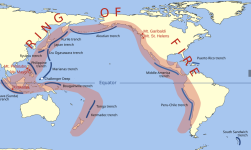
Maybe the Pacific coast is not the place to build though.

Ring of Fire:


https://en.wikipedia.org/wiki/Ring_of_Fire
 

Attachments

  • Screenshot 2024-09-16 at 2.38.33 PM.png
    Screenshot 2024-09-16 at 2.38.33 PM.png
    215.2 KB · Views: 6
  • Like
Reactions: Auguste_Fivaz

wco81

Ars Legatus Legionis
32,474
I was born and raised in one of those "less desirable" desolate, god-forsaken, barren, "high chaparral" Western places and they are less desirable for a number of reasons: winter, fire, water, wind, and dust come to mind.
The urge to leave was strong, the urge to return is nill even though there are a few improvements in infrastructure (fiber internet) and cheap housing and cheap power.
There has been an increase in folks moving to the high deserts, we've seen Boise, Spokane, and even places like Missoula MT go ape with building and sky rocketing housing costs.
A person who was on subsistence housing vouchers could afford a bit more in some of the off the main highway towns, and from what my family tells me, they are. But, 100 miles out of Spokane is COLD in the winter and finding medical care is difficult.
As part of a solution to homelessness, I don't see rural western America giving all that much succor to the poor, it's tough in them parts, always has been and they tend to take care of their own first. And in small towns, you know who your neighbors are, all of them.

I'm talking about places where I don't even see highways. They look like maybe dirt roads or at best 2-lane highways.

But I only brought it up to respond to the post saying we're running out of space. Well even if that were true, I would guess it's easier to adapt and build out some more infrastructure for these apparent-desolate places on land than under water?
 

wco81

Ars Legatus Legionis
32,474
Dutch researchers warn of the presence of carcinogenic chemicals used in flame retardants in recycled black plastics, used for food containers, toys, etc.

Potential routes of exposure not limited to ingestion but airborne carcinogen.

A new peer-reviewed study raises concerns that recycled plastic containing flame retardants, initially used in electronics, are being reused in the manufacturing of a variety of consumer products, potentially exposing people to high levels of cancer-causing and hormone-disrupting chemicals.

The chemicals, which have been linked to a number of health hazards, were detected in 17 of 20 black household products researchers tested, according to the study, which was published in Chemosphere by Toxic-Free Future, an environmental health research and advocacy group, and Vrije Universiteit Amsterdam.

They found the highest levels in sushi trays, beaded necklaces and kitchen utensils, according to the study. High levels were also detected in travel games, toys and other products.

“We’re being exposed in a number of different ways,” said Megan Liu, Toxic-Free Future’s science and policy manager and co-author of the study. “Not only is our food being exposed but because flame retardants aren’t bound to the polymers that they are added to, they can leach out into the dust and into the air in our homes.”

While the researchers were not able to link the exposure levels in the tested products to specific health outcomes, they said the presence of the chemicals alone were problematic.

Read in The Washington Post: https://apple.news/Al9ovEdtyQ-WA9pc3J_N0BA

Brominated flame retardants are banned in the US but the EU still allows some levels.

The harmful class of chemicals has been linked to endocrine disruption, thyroid problems, reproductive system complications, neurotoxicity and cancers. In children, exposure has been linked to impaired attention spans, poor motor skills and delays in cognitive development.

Nagarajan said that even concentrations of flame retardants can be toxic in small doses. “Dose versus toxicity can sometimes be non-linear and even small concentrations, can be quite harmful,” Nagarajan said.

Heating plastic kitchen utilities can cause flame retardants to leach into food, said Liu. Children sucking on children’s toys can result in retardants leaching into saliva, she said.

To conduct the study, researchers screened for bromine, an indicator for brominated flame retardants, in 203 black plastic household products sold across the country. They then chose 20 products with the highest levels of bromine to test for flame retardants.

The European Union’s limit for a particular kind of brominated flame retardant is 10 milligrams per kilogram — that specific flame retardant is banned in the United States.

Approximately 17 of the products had flame retardants with levels ranging from 40 to 22,800 milligrams per kilogram. Of those, 14 products contained the specific brominated flame retardant banned in the United States, with levels between 5 to 1,200 times greater than limits in the European Union.

Despite being banned in the US, these substances may end up in all kinds of products:

The flame retardants — found in areas like television casings, laptops and cables — end up in household items that do not need flame retardancy.

For years, officials and companies have worked to curb the use of flame retardants in products like furniture. In 2017, the Consumer Product Safety Commission voted to initiate rulemaking against some flame retardants found in foam products and electronics, urging manufacturers to remove the chemicals from the products and retailers to ensure that the products their selling are flame retardant free. But that doesn’t have appeared to have resulted in final rules.

Some states including Washington, New York and California moved to restrict the use of flame retardants in indoor electronics. Since 2006, the Europe Union has worked to ban or heavily restrict the use of different flame retardants.

“We lack regulation banning the most harmful chemicals in materials,” Liu said. To Liu, strong federal legislation is needed to restrict the use of hazardous chemicals in products. Without regulations, manufactures will “continue using these toxic additives and the plastic products that they create.”

Besides avoiding plastics as much as possible, the researchers recommend wet dusting and mopping regularly.
 

wco81

Ars Legatus Legionis
32,474
I haven't read much about Ozempic or other "fat" drugs, other than celebrities and other people really wanting them. Heard an Economist podcast talking about the potential for the class of drugs, everything from reducing chances of heart disease or strokes to all other kinds of medical benefits.

For one thing, some researchers found that the reduced incidence of cardio issues occurred before any significant weigh loss, so the benefits weren't necessarily related to just being at a lower weight.

There's a growing sense that this class of drugs may act directly on organs all over the body, including the brain, and possibly reducing inflammation throughout.

GLP-1 drugs have been available since 2005 to treat type 2 diabetes. Now, a handful of them are approved by the FDA to treat obesity. These medications include semaglutide (called Ozempic or Rybelsus when prescribed for diabetes, Wegovy for obesity), liraglutide (Victoza/Saxenda), and a closely related drug called tirzepatide (Mounjaro for diabetes, Zepbound for obesity). Several more are in the approval pipeline.

These drugs work by mimicking gut hormones that slow down digestion and lower blood glucose after you eat. Experts think they also lessen cravings by acting on certain areas of the brain. This has been a game changer for people who have struggled to lose weight despite doing their best with diet and exercise.

The benefits of these drugs seem to go even deeper than weight loss. They have been shown to lower blood pressure, improve lipid disorders and fatty liver disease, and reduce the risk of heart and kidney disease.

GLP-1 Drugs May Protect Organs​

Researchers have known for a long time that these medications can reduce inflammation and scarring and potentially protect our organs, says Katherine Tuttle, MD, a kidney disease specialist at the University of Washington and the executive director for research at Providence Health Care in Spokane, WA.

She helped lead a 2019 clinical trial called FLOW, which included people who had both type 2 diabetes and serious chronic kidney disease, a common complication of diabetes. People in the study either got semaglutide once a week or a placebo. After an average of about 3.5 years, people in the semaglutide group were 24% less likely to have a major kidney disease event such as dialysis, transplant, or kidney-related death, compared to those who got the placebo. People in the semaglutide group were also 20% less likely to die from any cause during the study period.

“We’ve never seen anything like this before,” Tuttle says. “The potential impact on the public’s health is enormous.”

People on semaglutide were also 20% less likely to have a heart attack and stroke during the study. In fact, the drugs were so good at reducing cardiovascular risk and improving kidney health that the researchers stopped the study early. “Basically, it was not ethical to continue giving people placebo,” Tuttle says. These effects were independent of whether someone lost weight.

https://www.webmd.com/obesity/features/ozempic-obesity-meds-health-benefits
There are plans to make oral forms of GLP-1, ones targeted for specific conditions, ones which wouldn't have to be taken indefinitely as is the case for treating obesity.
 

wco81

Ars Legatus Legionis
32,474
Auto manufacturers are adopting LEDs -- probably costs have come down, maybe below that of the incandescents. Complaints about the LED lights being too bright in cars are common on social media now.

As it turns out, manufacturers have not increased the brightness of these lights. In fact in Europe, cars are allowed to have brighter lights, 430k candela vs. 150k candela in the US.

It's a combination of factors, the color temperature and the fact that there are more SUVs on the road so the headlights are more likely to be aimed at the eyes of other drivers.

It turns out that the NHTSA approved adaptive headlights, which would use sensors to reduce the intensity of the beam if sensors detected oncoming vehicles.

In 2022, NHTSA announced it would allow US car manufacturers to install adaptive driving beam headlights, a technology already widely used across Europe.

Many headlights in the US are equipped to automatically switch from high to low beams when another car is ahead of them. But adaptive headlights are equipped with a complex array of sensors and LED lights, explains David Aylor, vice-president for active safety testing at the Insurance Institute for Highway Safety. When the system’s camera senses a vehicle or pedestrian approaching the front of the car, only the potentially disruptive sections of light switch off or dim.

This means a driver with adaptive headlights can use high beams all the time. The system just “shutters light for anybody or anything that shouldn’t be illuminated”, Brannon says. According to a 2019 AAA report, headlights increased roadway lighting by as much as 86% compared to US headlights without the adaptive beam technology.


And yet, no adaptive high beams have been installed in the US since the NHTSA approved the technology. The US and Europe have different lighting and testing standards, and Aylor says it’s a struggle for manufacturers to meet US standards as well as afford the more complex lighting systems.

Some are skeptical that adaptive headlights are really a panacea. Baker calls the technology a “scam” and says research has shown the lights aren’t yet effective at sensing other cars on hills or during turns. If the sensors toggle from high beam to low beam, that’s still too bright for most people’s eyes, he argues. “It’s too intense, and it’s too blue,” he says.

But Brannon says adaptive headlights are promising and that AAA has lobbied extensively for them. The group is also researching other ways to make headlights less harsh.

“Is it possible that we could provide the same level of illumination with a color that is more human friendly?” he says. “We don’t know the answer to that yet.”

https://www.theguardian.com/global/2024/oct/31/headlights-too-bright
Having an array of headlights and sensors would obviously increase costs. If detection of approaching or oncoming objects can be done only with cameras, the cost may be more manageable. I recall seeing some specs for cars with LED arrays instead of one large LED source for headlights but they don't seem to be common, at least not yet.

Otherwise, I can't imagine they'd use something like radar or lidar to try to detect objects hundreds of feet away.
 

wco81

Ars Legatus Legionis
32,474
Cut from spaceweather.com: The annual December solstice occurs this Saturday, Dec. 21st, at 4:19 a.m. EST. It marks the beginning of winter in the northern hemisphere amd summer in the southern hemisphere. Wherever you live, Happy Solstice!
the days of darkness start to decrease!

One time I visited Ireland, for business, I heard about this site:

Newgrange is best known for the illumination of its passage and chamber by the winter solstice sun. Above the entrance to the passage at Newgrange there is an opening called a roof-box. This baffling orifice held a great surprise for those who unearthed it. Its purpose is to allow sunlight to penetrate the chamber on the shortest days of the year, around December 21st, the winter solstice. At dawn, from December 19th to 23rd, a narrow beam of light penetrates the roof-box and reaches the floor of the chamber, gradually extending to the rear of the chamber.

As the sun rises higher, the beam widens within the chamber so that the whole room becomes dramatically illuminated. This event lasts for 17 minutes, beginning around 9am. The accuracy of Newgrange as a time-telling device is remarkable when one considers that it was built 500 years before the Great Pyramids and more than 1,000 years before Stonehenge.

The intent of the Stone Age farmers who build Newgrange was undoubtedly to mark the beginning of the new year. In addition, it may have served as a powerful symbol of the victory of life over death.

Each year the winter solstice event attracts much attention at Newgrange. Many gather at the ancient tomb to wait for dawn, as people did 5,000 years ago. So great is the demand to be one of the few inside the chamber during the solstice that there is a free annual lottery (application forms are available at the Visitor Centre). Unfortunately, as with many Irish events that depend upon sunshine, if the skies are overcast, there is not much to be seen. Yet all agree that it is an extraordinary feeling to wait in the darkness, as people did so long ago, for the longest night of the year to end.

https://www.newgrange.com/
I hear it's impossible to visit it when it happens, because of demand.

OTOH, Ireland, especially in winter, isn't really known for clear sunny weather so how often does it get sunlight to illuminate the chamber?
 
  • Like
Reactions: Auguste_Fivaz

wco81

Ars Legatus Legionis
32,474
That's interesting I just returned from a trip to Italy where I had one of the worst hay fever symptoms -- burning eyes, runny nose -- in several years.

I've had hay fever here in California most of my life, though it's been pretty mild for years.

I stayed in Umbria for a week, where even the largest cities and towns are surrounded by hay fields. They were mowing them during this time. Weather Underground said "very high" grass pollen in these areas, though I moved to bigger cities north, where it wasn't as rural and it was a little better.

I once stayed in Lake Como in late spring and it was really bad there because there are many gardens in the area which have imported all different types of plants from all over the world. I would go on day trips an hour away and the symptoms would clear and then when I returned to my accommodation in Varenna, the symptoms would return by next morning.
 
  • Hug
Reactions: Auguste_Fivaz

wco81

Ars Legatus Legionis
32,474
In the past, it was players in their 30s who suffered Achilles tears -- Kobe, Dominique Wilkins.

This year, two of the players are in their mid 20s, Tatum and Haliburton.

Haliburton plays for a team which plays at a high pace, compared to teams which play more deliberately. He had a calf strain which they had managed for several games, resulting in fewer minutes played. But in game 7, he started out playing well and one move caused it.

Tatum didn't have a calf strain AFAIK or any kind of symptoms in that part of the body. It was just a sudden reaction to a lose ball which seemed to cause it.

The other star who tore his Achilles in the playoffs was Damian Lillard but he's in his mid 30s.

They say it's the style of play, players running up and down the court more which stresses the soft tissues. But teams in the '80s used to play fast as well, actually averaged more points per game than now.

Nobody is raising the possibility of drugs or supplements which may affect the soft tissue. A few years ago, several NFL players were suffering tears to large muscles, like their pecs, biceps or triceps. There were suggestions that PEDs could be a possible cause but it wasn't pursued.

Probably can't draw conclusions or infer some trend based on one season.
 

wco81

Ars Legatus Legionis
32,474
My local health department hands out test kits once a year. Not a continuous monitor, but a one-time reading. I think it read over a 48 hour period? In an area with no natural gas and no granite, that seems like enough.
Found out my local county health department also offers these kits.
 

wco81

Ars Legatus Legionis
32,474
Trying to read or understand it without understanding its role / position in the field is super confusing, so here's a short overview of the 3 camps in the field. Spoilered for ones who don't want to see LLM generated content:

This work is a legit and serious piece of scientific research, published in Neuroscience and Biobehavioral Reviews, a high-impact, peer-reviewed journal. However, the specific theory it proposes—biological computationalism—is a relatively new and "deliberately provocative" attempt to bridge a long-standing gap in the field.
To understand where this sits, you have to look at the three "camps" in the field:

1. The Mainstream (Computational Functionalism)

Most AI researchers and many neuroscientists belong to this group. They believe that if we get the "math" right, the machine will be conscious, regardless of what it's made of. This is the dominant view driving the massive investments in LLMs and Artificial General Intelligence (AGI).

2. The Traditional Skeptics (Biological Naturalism)

This group argues that consciousness is a biological "secretion" of the brain, like digestion is a process of the stomach. They believe digital computers can simulate consciousness but can never actually be conscious.

3. The New "Third Path" (Biological Computationalism)

This paper represents an emerging "middle ground." It acknowledges that the brain does compute (agreeing with the mainstream), but it argues that the way it computes is fundamentally different from digital silicon (agreeing with the skeptics).
The Authors: Borjan Milinkovic and Jaan Aru are established researchers in neuroscience and computer science. Jaan Aru, in particular, has published extensively on the cellular mechanisms of consciousness.

The Reputation: While the idea that "the substrate is the algorithm" is gaining traction, it is still a challenging alternative to the trillion-dollar AI industry's belief that more data and more chips will eventually lead to a "mind".

Yann LeCun, who used to be AI chief at Meta, left the company. One reason may be that he is in the world model camp, not LLMs, which he sees as a dead end.

He’s actually been hinting at the answer for a long time. When it comes to human-level intelligence, LeCun has become notorious lately for saying LLMs as we currently understand them are duds—no longer worth pursuing, no matter how much Big Tech scales them up. He said in April of last year that “an LLM is basically an off-ramp, a distraction, a dead end.” (The arch AI critic Gary Marcus has ripped into LeCun for “belligerently” defending LLMs from Marcus’ own critiques and then flip-flopping.)

A Wall Street Journal analysis of LeCun’s career published Friday points to some other possibilities about the reasons for his departure in light of this belief. This past summer, a 28-year-old named Alexandr Wang—the co-creator of the LLM-based sensation ChatGPT—became the head of AI at Meta, making an upstart LLM fanatic LeCun’s boss. And Meta brought in another relatively young chief scientist to work above LeCun this year, Shengjia Zhao. Meta’s announcement of Zhao’s new role touts a scaling “breakthrough” he apparently delivered. LeCun says he has lost faith in scaling.

https://gizmodo.com/yann-lecun-world-models-2000685265
 

wco81

Ars Legatus Legionis
32,474

wco81

Ars Legatus Legionis
32,474
For some reason, I thought that radio signals took minutes to reach earth at the speed of light.

But Google AI Overview says it's about 1.3 to 1.5 seconds. I didn't double-check the math and AI did have problems with math problems posed as words but I assume that's correct.

Well we did have black and white TV transmissions from the surface of the moon -- or the alleged surface of the moon, not a TV studio in Hollywood.:sneaky:
 

wco81

Ars Legatus Legionis
32,474
Saw on TV the claim that regular use of GPS causes the hippocampus to shrink. I couldn’t find anything that establishes a causal link.

Instead there are various articles about hippocampus volume being greater for people who habitually exercise spatial memory by NOT using GPS.

But how would researchers validate this possible connection? Do brain scans of people before and after they use GPS regularly? Can scans accurately measure hippocampus volume or could it only be done by post mortem measurements?

Yet spatial memory, the mental map of places you regularly go to, is suppose to be crucial. This piece suggest instead of turn by turn directions, navigation apps would use sonic beacons to direct you towards your destination.

https://www.scientificamerican.com/article/how-gps-weakens-memory-mdash-and-what-we-can-do-about-it/

Or will people just eschew navigation apps for paper maps, the way some people have given up smart phones for flip phones?

I would think that most people below a certain age never used paper maps, yet they presumably remember how to arrive at their schools, work, stores, etc. without using GPS. Or they can remember the route they took when they visited an unfamiliar place to get back to their car or the bus stop without pinning these places in their navigation app.
 
  • Like
Reactions: Bardon

wco81

Ars Legatus Legionis
32,474
I use GPS every time I travel.

I used to use paper maps. But I would have to look at the map every few turns and I'd have to pull over, look in the map and locate my current position and look for the next turns.

It's just a big time saver and when planning trips, you can save locations where you're going to drive to and just open it on Google Maps on the phone.

When you watch a show like The Amazing Race, you can see younger contestants who've never used paper maps. They just borrow phones from onlookers instead.

It's possible to navigate an unfamiliar place with paper maps but it will take much more time, more prone to errors.
 
Status
You're currently viewing only wco81's posts. Click here to go back to viewing the entire thread.