Observatory Version of Misc Musings, Ravings, and Random Thoughts

Status
You're currently viewing only Ecmaster76's posts. Click here to go back to viewing the entire thread.

Ecmaster76

Ars Legatus Legionis
17,042
Subscriptor
Supernovas decrease the mass of a star substantially

The remnant is much more dense however which increases the strength of the gravitational field at the new surface

In the case of black holes I'd guess that the event horizon has a smaller radius than the original star prior to its giant phase

Finally if you draw a large enough circle around the remnant and surrounding nebula you'll describe a system which will have a similar, but not identical, mass to the original star which would be gravitationally similar at enough of a distance.

The real discrepancy in mass will be from matter being converted to energy over the life of the star, especially during the supernova. I'm not sure what fraction of the mass this usually is
 

Ecmaster76

Ars Legatus Legionis
17,042
Subscriptor
In the case of black holes I'd guess that the event horizon has a smaller radius than the original star prior to its giant phase
Well, yes.

Otherwise it wouldn't have gone supernova (let alone expanded to a giant phase) due to being a black hole from the beginning.
I was thinking along the lines of the event horizon extending past the "surface" of the singularity itself (if it even has one in there)
Which hopefully informs OP that while black hole have powerful gravity you can still safely orbit them like the original star (at least from the gravitational perspective)
 

Ecmaster76

Ars Legatus Legionis
17,042
Subscriptor
That's the complex mathematical process, verifying a block of transactions, isn't it? The miners are in a race to verify a block, and their reward is more bitcoin.
Nope. There is a transaction ledger for exchanges

Mining is pure, unrelated mathematical wankery that gets announced when it's done

Musk didn't mine new coin but he did increase demand
 

Ecmaster76

Ars Legatus Legionis
17,042
Subscriptor
From the article:
Jill Hruby is the undersecretary for nuclear security at DOE and the NNSA administrator. “These extraordinary results from NIF advance the science that NNSA depends on to modernize our nuclear weapons and production. It also offers potential new avenues of research into alternative energy sources that could aid economic development and help fight climate change,” she said in a press release.
Emphasis added. I saw mentioned in another article that this could be an improved trigger for H bombs instead of need a fissile stage.

I'm not going to say that this won't have civilian applications but for now it doesn't seem like it will scale for energy production.
 

Ecmaster76

Ars Legatus Legionis
17,042
Subscriptor
That's four orders of magnitude more massive that Sagittarius A* (the central black hole of the Milky Way)

Sagittarius A* has a diameter a bit larger than Mercury's orbit

I'd assume a 10^10 solar mass object would still be smaller than the diameter of the solar system or not much larger but IANAastronomer

Edit: wiki says it would have ~400 AU radius
https://en.wikipedia.org/wiki/Black_hole

Still within the Oort cloud but larger than I expected
 

Ecmaster76

Ars Legatus Legionis
17,042
Subscriptor
That's highly counterintuitive, but the supposed mass of the universe is 2E53 kg and the Schwartzchild radius of that mass is 3x10^26 meters, or about 31 billion LY. As it happens that is about twice the Hubble radius.

Just a guess but I would expect that the mass estimate of the universe is probably at least partially derived from the Hubble radius (that is, its estimated using the estimated volume of the universe)

Despite the reversed causality of the math, the universe is like a singularity that we just happen to be viewing from the inside but I'll let the cosmologists figure out how far the comparison really goes.
 

Ecmaster76

Ars Legatus Legionis
17,042
Subscriptor
From a reddit post

View: https://www.reddit.com/r/BoringCompany/comments/137ehlh/lvcc_loop_hits_peak_of_more_than_32000_passengers/

Compared to the 32,000 people per day of the LVCC Loop, daily ridership of even the busiest streetcar system - the San Fransisco Cablecar - is only 14,900 passengers per day over 5.2 miles which works out as only 2,865 passengers per mile.

And the average daily ridership of all the streetcars in the USA is a mere 6,725 passengers per day over an average of 24 stations which works out as a pretty miserable 1,261 passengers per mile and a surprisingly low 280 passengers per station per day.

I know the construction cost per mile is less than light and heavy rail. I wonder how construction costs compare to streetcar builds
 

Ecmaster76

Ars Legatus Legionis
17,042
Subscriptor
Setting aside comparing average numbers to peak numbers, the SF cable cars are a tourist attraction, not a real transit network.
Vegas is a tourist attraction!

A better comparison would be SF MUNI, with an average of just over 150k passengers per day. And if you look outside the US, you have tram systems like Zürich's that average over 360k passengers per day.

Yes, I agree that average numbers would be better in the long run but as the post says, the peak numbers prove it can scale to match what other systems typically do.

Its just interesting that an under-construction system with very few miles and 3-5 stations (depending on when they counted) can even be comparable to a much larger, mature system that was most likely more expensive to build and maintain.

We definitely dont have proof yet but the numbers continue to be promising. Since they have committed to building out a larger scale system we will be able to compare apples to apples in 2-4 years
 

Ecmaster76

Ars Legatus Legionis
17,042
Subscriptor
SpaceX moved from TEA-TEB on Merlin to spark plug torch ignition for Rpator, though WIkipedia now says they've moved on to something else that's not yet publicly known:
The sourece for that Wiki claim is probably this interview

View: https://www.youtube.com/watch?v=E7MQb9Y4FAE&pp=ygUbZXZlcnlkYXkgYXN0cm9uYXV0IHJhcHRvciAy


Musk wouldn't go into it but just from the part of the motor they were looking at and the theme of reducing complexity, its almost certainly a technique using the existing pump machinery. They are in new frontiers of chamber pressures and may be able to reliably induce autoignition, if I had to guess (but IANARocketScientist)
 

Ecmaster76

Ars Legatus Legionis
17,042
Subscriptor
I had to pull an older UV/Vis out of storage and was asked to check if it was still working. I'm doing this in my office, not a lab… what do I have for samples? It turns out that I brew my earl gray tea darker than my oolong. Also, the spectrometer works fine.

I now have a real quandary. What do I do with the spectral patterns of my tea (from 400 to 1000 nm)? Do I print them out and put them on the labels? Up on the wall? Or is that too crass? I don't want to hurt my nerd-cred by showing off something most would consider blasé. Perhaps I could keep it in reserve and make it an option for people to review when I offer them tea? Perhaps a light subtle touch…
There's got to be a good "Computer: Earl Grey, hot" joke you can work in somewhere
 
  • Like
Reactions: Defenestrar

Ecmaster76

Ars Legatus Legionis
17,042
Subscriptor
I have had access to the reactor wing of a [RESEARCH] facility and also carpooled for a number of years with a health physicist (of the same facility). I am in agreement with the most likely cause of death reached at the end of the video.
An extended relative is a security guard at a nuclear power plant. She had a recent target sheet from pistol practice on her fridge the last time I visited. The grouping was impressive.
 

Ecmaster76

Ars Legatus Legionis
17,042
Subscriptor
That looked really weird to me but in assembly it makes sense
1723172828525.png
 

Ecmaster76

Ars Legatus Legionis
17,042
Subscriptor
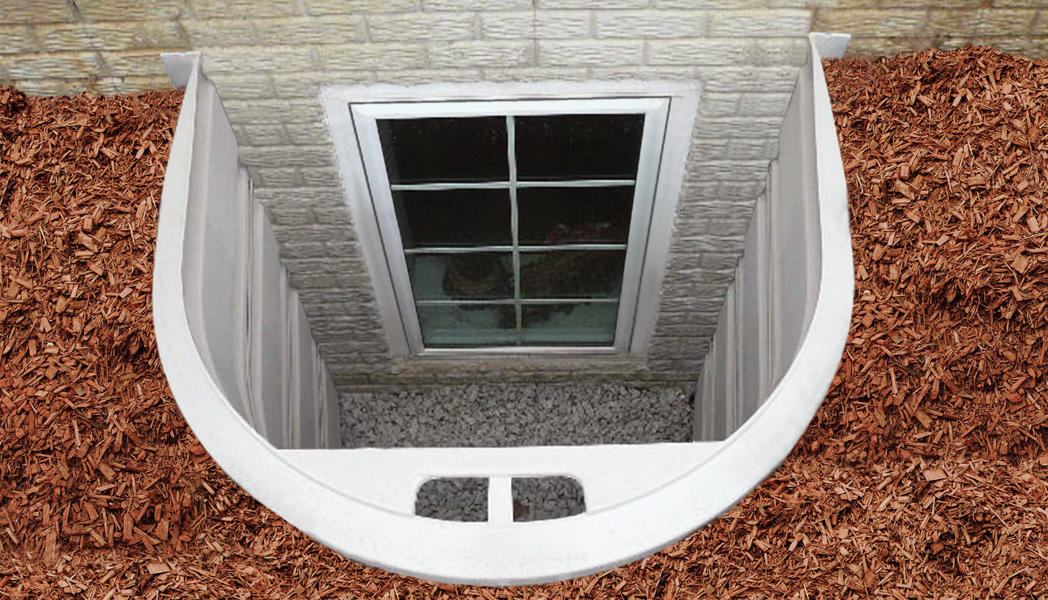
It's more about ensuring an emergency escape/rescue route than a raw "below grade". The house I grew up in had "window wells" for the basement, which would qualify. Later owners finished out the basement, including a bedroom.

Underwater hotels are a thing.

Example window well:


Egress-Window-Well-stakwel.jpg


2015 INTERNATIONAL RESIDENTIAL CODES​

SECTION R310 – EMERGENCY ESCAPE AND RESCUE OPENINGS​

R310.1 Emergency escape and rescue opening required.​

Basements, habitable attics, and every sleeping room shall have not less than one operable emergency escape and rescue opening. Where basements contain one or more sleeping rooms, an emergency escape and rescue opening shall be required in each sleeping room. Emergency escape and rescue openings shall open directly into a public way, or to a yard or court that opens to a public way.
Does that have a ladder built into it?
 

Ecmaster76

Ars Legatus Legionis
17,042
Subscriptor
There's a very large asymmetry in the JADES data regarding galactic spin. Score another point for black hole cosmology.

https://www.space.com/space-explora...pace-telescope-discovery-might-blow-your-mind

https://academic.oup.com/mnras/article/538/1/76/8019798?login=false

The survey was only of 268 galaxies per the first link. I'm not sure why JWST would be required for that

Also I'd have thought such a disparity would have been observed in Galaxy Zoo ages ago.

Edit: second link answered those questions pretty quickly...
 

Ecmaster76

Ars Legatus Legionis
17,042
Subscriptor
An excellent question.

Since I don't have a good answer, I'm going to BoE the potential amount of re-entry material from a 60,000 satellite fleet. Presume an average satellite is 1 ton* and the refresh rate is every 5 years. That's 33 tons a day, which is not far off from the estimated influx of natural meteorite material I'm finding at around 49 tons per day.

Change the assumption on average satellite mass to 2 tons* and we're at 66 tons per day of satellite re-entry.

The claim in the article checks out.

*The current cell-enabled V2 Mini Starlink is about a ton. The Starship version of Starlink is supposed to be around 2 tons. There's enough of a step-change in planned capability compared to the F9-launched satellites that I'm hoping they will at least double the expected lifespan. Either way we are still looking at a metric shitload of mass being burned up in the atmosphere.
Keep in mind that a decent portion of that mass is propellant (xenon or such on these I think), solar arrays, and batteries. They don't need a lot of structural rigidity once in orbit and I'd expect SpaceX puts as much support as possible into the payload dispenser rather than the sat.
 

Ecmaster76

Ars Legatus Legionis
17,042
Subscriptor
The numbers I used should be dry mass.
I don't think it is. I'm pretty sure they have only ever quoted their loaded mass; usually in the context of the total payload mass of each launch. I'll see if I can find numbers when I get a chance.

Still, not the whole dry mass is metallic either.
 

Ecmaster76

Ars Legatus Legionis
17,042
Subscriptor
A decent analysis of Starlink V1 sat mass. I'm not a satellite engineer but I dont see any glaringly obvious flaws
https://lilibots.blogspot.com/2020/04/starlink-satellite-dimension-estimates.html

So here is the mass breakdown for total of 260kg per satellite:
  • 75kg for 30m2, 6kW solar panels
  • 33kg of Krypton propellant
  • 30kg of high pressure vessel
  • 7kg for HET
  • 20kg PPU
  • 24kg of batteries
  • 71kg for everything else (structure, GNC, sensors, payload etc)
Roughly, thats about a third of its mass as potentially aluminum.


Another source is very close on that 1/3 figure though it estimates a noticeably lower load of propellant
https://www.mdpi.com/2071-1050/16/21/9431
1754878697032.png

Since I don't have a good answer, I'm going to BoE the potential amount of re-entry material from a 60,000 satellite fleet. Presume an average satellite is 1 ton* and the refresh rate is every 5 years. That's 33 tons a day, which is not far off from the estimated influx of natural meteorite material I'm finding at around 49 tons per day.
The proposed version 2 fleet is about 30,000 sats. 2 tons total mass, give or take, estimates to 0.666 tons structural mass per satellite if the design is similar. Averaging 16.5 satellite reentries per day would yield ~11 tons per day of aluminum, assuming it all vaporizes in the upper atmosphere.
 

Ecmaster76

Ars Legatus Legionis
17,042
Subscriptor
Observatory mods: Lets just pin Randall's latest screed. It'll save you some effort :biggreen:

People looking for the gaps in our understanding where the meaning of consciousness or free will might hide often turn to quantum uncertainty or infinite cosmologies, as if we don't have breathtakingly complex emergent phenomena right there in our freezers.

(alt text from https://xkcd.com/3144/)
 
Status
You're currently viewing only Ecmaster76's posts. Click here to go back to viewing the entire thread.